Sir Ken Robinson: Bring on the learning revolution! Check out the Cloths Of Heaven quote at the end, too! I agree.
About Me
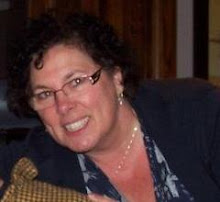
- Geraldine
- I still feel like a teenager on the inside, unfortunately my children do remind me how old I am!! I have lived for 20+ years as an Irish expat in The Netherlands. My favourite city here has to be Amsterdam.
Showing posts with label weaknesses. Show all posts
Showing posts with label weaknesses. Show all posts
Wednesday, May 26, 2010


Saturday, December 5, 2009
Promise
A while back I went to a lecture. Barbara Kingsolver of The Bean Trees fame was the guest speaker. Her opening remark was a general one, applicable to all her novels. She says that when she begins a new novel, she makes a promise, to herself and to the reader. The novel is successful in her eyes if she has, at its conclusion fulfilled that promise.
So, I thought that now would be a good time to ask that question and to discuss it further.
Now, as we prepare to re-read our first draft, and where necessary, edit it, I think it is of utmost importance to answer the question: Have I kept my promise in this novel? Have I come through, completed the task?
After the lecture I thought about The Cloths of Heaven, the basis for this topic, and asked that question and had to smile, because I had neatly packed the novel between a Prologue and an Epilogue, both incorporating some of the same sentences and scenes. In the Prologue I had asked the question: Was James’ Street secret to be buried forever? And in the Prologue I have uncovered the secrets, given an answer to the question, and tied up the loose ends. What was my promise then, in this novel? The promise was to give an answer to that question and I did. The circle is complete, no loose ends, and a feeling of satisfaction at the novel’s conclusion.
Making a promise when you set out, or asking that question that sparks off the novel, will give the novel its direction, will help you to filter the elements and utilise them fully. So that’s what you do first, when it comes to revising your novel. Ensure you have fulfilled your promise or answered that all-important question.
Once you have established that, you can begin reading and revising. Other elements can now be considered simultaneously with that first question. You will find that there are passages that do not add to the fulfilment of the promise or pivotal question, and at these points you need to ask yourself what they add to the novel, if anything. Maybe they are descriptive of character or place. They might add an extra dimension in perception or be useful in adding clarity to the setting. If they do none of these things, it might in fact be better for the novel as a whole to scrap them. And be ruthless. Pieces of banality will weaken a potentially strong story.
There may be passages where the pace lags, or where you seem to skim over issues. Here you can either trim down or expand. Sometimes the sequence of events needs to be reconsidered in order to maintain the suspense or to heighten the emotional power of a chapter. Sometimes even whole chapters ought to be switched around. Remember, before you decided to write fiction you were widely read, so trust your gut on these matters. When does foreshadowing (hinting at an incident in the future) add to the novel, and when does it spoil the suspense? This is an individual issue, and the answer will vary from novel to novel.
In some psychological thrillers, the victim and the murderer may be revealed in the first chapter, and the purpose of the novel will be to have the investigator discover what we already know. In other novels, the power of the novel lies in keeping the reader in the dark until the last moment, and laying clues that will have the reader constantly guessing ‘whodunnit’. Both forms are equally valid, but once the promise is made, the novel must adhere to that one route. To swap and change within the novel will in fact, break the promise to the reader, and weaken the novel. As a reader you know this, so as a writer, you will ‘feel’ it when you’ve got it right.
In The Cloths of Heaven, one of the characters dies. In my first draft I actually foreshadowed that event with a rogue sentence which simply stated ‘he died’ about two chapters before it in fact, happened. Instead of strengthening this event, I had weakened it, made it banal, and almost made the following chapters, redundant. I took out that one statement, and brought the power back into the prose.
I would recommend that when you are reading that first draft, every time you feel your energy sapping away, just put a mark in the margin, even if you don’t know what’s wrong with the paragraph or sentence or whatever. On a second or third reading, when you’ve trimmed and enhanced other, more obvious faux pas, take the time to examine these again. Chances are, it might just be a badly constructed sentence, or paragraph that is difficult to read. Simplify it. Is it too long? Then split it into two sentences. Does it add to the story or could you do without it? Then scrap it.
Sometimes it’s hard to erase a part of your creation. Sometimes there’s that one, beautiful sentence, the one you fear you may never write again. And yet, it doesn’t fit in. So you have to take it out.
In order to reduce the pain of this process, I have a reserve document, just for these sentences and paragraphs, a place where I put them out to pasture, instead of killing them off completely. I may never look at them again, but just knowing they are there, in case….., makes editing more bearable.
So, I thought that now would be a good time to ask that question and to discuss it further.
Now, as we prepare to re-read our first draft, and where necessary, edit it, I think it is of utmost importance to answer the question: Have I kept my promise in this novel? Have I come through, completed the task?
After the lecture I thought about The Cloths of Heaven, the basis for this topic, and asked that question and had to smile, because I had neatly packed the novel between a Prologue and an Epilogue, both incorporating some of the same sentences and scenes. In the Prologue I had asked the question: Was James’ Street secret to be buried forever? And in the Prologue I have uncovered the secrets, given an answer to the question, and tied up the loose ends. What was my promise then, in this novel? The promise was to give an answer to that question and I did. The circle is complete, no loose ends, and a feeling of satisfaction at the novel’s conclusion.
Making a promise when you set out, or asking that question that sparks off the novel, will give the novel its direction, will help you to filter the elements and utilise them fully. So that’s what you do first, when it comes to revising your novel. Ensure you have fulfilled your promise or answered that all-important question.
Once you have established that, you can begin reading and revising. Other elements can now be considered simultaneously with that first question. You will find that there are passages that do not add to the fulfilment of the promise or pivotal question, and at these points you need to ask yourself what they add to the novel, if anything. Maybe they are descriptive of character or place. They might add an extra dimension in perception or be useful in adding clarity to the setting. If they do none of these things, it might in fact be better for the novel as a whole to scrap them. And be ruthless. Pieces of banality will weaken a potentially strong story.
There may be passages where the pace lags, or where you seem to skim over issues. Here you can either trim down or expand. Sometimes the sequence of events needs to be reconsidered in order to maintain the suspense or to heighten the emotional power of a chapter. Sometimes even whole chapters ought to be switched around. Remember, before you decided to write fiction you were widely read, so trust your gut on these matters. When does foreshadowing (hinting at an incident in the future) add to the novel, and when does it spoil the suspense? This is an individual issue, and the answer will vary from novel to novel.
In some psychological thrillers, the victim and the murderer may be revealed in the first chapter, and the purpose of the novel will be to have the investigator discover what we already know. In other novels, the power of the novel lies in keeping the reader in the dark until the last moment, and laying clues that will have the reader constantly guessing ‘whodunnit’. Both forms are equally valid, but once the promise is made, the novel must adhere to that one route. To swap and change within the novel will in fact, break the promise to the reader, and weaken the novel. As a reader you know this, so as a writer, you will ‘feel’ it when you’ve got it right.
In The Cloths of Heaven, one of the characters dies. In my first draft I actually foreshadowed that event with a rogue sentence which simply stated ‘he died’ about two chapters before it in fact, happened. Instead of strengthening this event, I had weakened it, made it banal, and almost made the following chapters, redundant. I took out that one statement, and brought the power back into the prose.
I would recommend that when you are reading that first draft, every time you feel your energy sapping away, just put a mark in the margin, even if you don’t know what’s wrong with the paragraph or sentence or whatever. On a second or third reading, when you’ve trimmed and enhanced other, more obvious faux pas, take the time to examine these again. Chances are, it might just be a badly constructed sentence, or paragraph that is difficult to read. Simplify it. Is it too long? Then split it into two sentences. Does it add to the story or could you do without it? Then scrap it.
Sometimes it’s hard to erase a part of your creation. Sometimes there’s that one, beautiful sentence, the one you fear you may never write again. And yet, it doesn’t fit in. So you have to take it out.
In order to reduce the pain of this process, I have a reserve document, just for these sentences and paragraphs, a place where I put them out to pasture, instead of killing them off completely. I may never look at them again, but just knowing they are there, in case….., makes editing more bearable.
Tuesday, October 20, 2009
Strongest Life. Don't ask how, just ask why not.
I had a wonderful meeting with Manon, from UMAI centre in Alphen where I live. Inspired to create workshops for women to rediscover their strengths, desires and dare I say it, calling in life.
The key word is AWARENESS. Becoming aware, and choosing to face every day with an openness and willingness to truly absorb and experience each situation to its fullest is one of the greatest gifts you can give to yourself.
AWARENESS implies having the courage to see your dark side, to integrate that, and thus allow it to become another bridge to your authentic, fulfilling life.
Being aware will help us tranform painful experiences into learning experiences. AWARENESS makes the pain endurable.
What follows is an article I wrote last year, but one I feel merits republishing in light of my meeting this morning.
In the spring, I heard I was being made redundant. My company was downsizing and I was superfluous to needs. At that time I did the Marcus Buckingham workshop on line, and filled in the questionnaire on Strengthsfinder.com. An eye opener, a turning point, a revelation. It led to my reading the articles on Work-life balance on Business Exchange and even to contributing my tuppence ha’penny’s worth of commentary.
Later, when I had thought more seriously about the subject, in particular in relation to the premise that women at mid life, though seemingly more successful are sadder and sicker than ever, I was prompted to write my own article on the subject, ‘Let’s Get Personal’. I published it on my blog, found Marcus Buckingham on twitter just to keep up.
All the while I’m thinking, there’s a book in here somewhere.
And of course, there was. Marcus Buckingham has just written it. Find Your Strongest Life is all about the choices women make and how and why we make them. His motivation for writing it stemmed from the Oprah workshop and the subsequent response on the discussion boards.
He is a great analyst, an intuitive observer, and intelligent enough to step aside and process all the information impartially. But he is not a woman.
In the last couple of months I have been working on these issues myself and getting excited about my life all over again. And excited about my friends’ lives too. Since learning to live to my strengths and being manifestly happier I am also a better friend.
The biggest wake up call for me was realising that I had always instinctively known what my strengths were and that using them would be to my and possibly everyone else’s advantage. Unfortunately my working environment was not conducive to employing these strengths. In fact, though it is hard to believe, what were in fact my strengths were the very traits that my bosses wanted me to minimise and hide. As a Creator and a Pioneer I was always coming up with new ideas, new ways of doing things. But when I voiced these in meetings, I was repeatedly overruled more or less told to get back into my box/ Frustration grew. I became resentful, recalcitrant and de-motivated. But before Marcus Buckingham and learning to live to your strengths I spent a lot of time feeling weakened and uninspired at work. Why not go for another job? You might ask. Because somewhere deep down, I almost believed the bosses were right. I believed they knew better than I. I believed that I was a difficult, dissatisfied employee, and that there was no point in moving on because I would antagonise the next boss just as much.
When the redundancy notice came, and I coincidentally came across the Oprah workshop, my life turned around. Learning to respect who I am, and learning to nurture my natural talents has given me a new lease of life. I have more energy than ever. My ability to learn new things, and my curiosity and determination to learn them, has returned in abundance. My mind is again filled with new ideas and despite still being ‘officially’ unemployed I am more contented than I have been in a decade. It is also much easier to be around me.
But, I want to get away from only discussing my own evolution because there is much more to this subject than that. In my previous strengths article ‘Let’s Get Personal’ I investigated the reasons why I turned out the way I did. I asked myself why it was so hard for me to find and live to my strengths, why I would I take on a bosses view of me above my own view of who I am.
Now, a couple of months later it is not just about me reading a book, and applying what I learn to myself. Everywhere I go, whomever I meet, friends, acquaintances, online contacts via social networks, I am walking the walk, and talking the talk. And that is what I want to go into here. I want to discuss what it is to share this with friends, to learn from them and more importantly to give back to them a little of what I am experiencing.
It is amazing.
I know a woman, a mother and career woman. She likes to achieve. Lately she and I have been talking a lot about character, and strengths and stumbling blocks. She is at a crossroads career wise and has been doing some self study and getting advice from others too. Yet she said something to me recently that made my jaw drop. Ok, she said. So I’ve been shown who I am, what my characteristics are. I am being given new insight into my personality. But, where are my strengths? Tell me more about my strengths. More importantly, what are my weaknesses, so that I can work on them?
And that’s the thing. Aren’t our strengths related to who we are? Marcus Buckingham tells us that our strengths are those talents that were always present and that they are inherent to who we are. Unfortunately we have been programmed to think that strengths and weaknesses lie outside of our core, and that we can learn new strengths and that we should focus on weaknesses, work on minimising them, or if we are lucky, turn them into strengths. That just isn’t true. Core strengths and weaknesses will always be just that.
We might say that our strength might be that we are quick to learn, but it will only be a strength if it is applied to learning things that fit us. If we put our energies into learning skills that we don’t like performing then our strength becomes a weakness. So, let’s define the strength more accurately and in Marcus’ own terms. I feel strong when I apply myself to learning new skills in areas that stimulate and please me. I know in my case, being a quick learner soon became a noose around my neck, and actually made it harder to find my real strengths, those activities that thrilled me, that made time stand still. Now, when I puzzle over new ways of designing a web page, or when I am writing an essay for my film studies, or thinking up the plot of my next book, then being a quick learner is a strength.
So during my talks with the mother and career woman, I said that her greatest gifts lie in those character traits that were defined in the test. The fact that she is searching and feeling weakened is because she may be utilising them wrongly, and so turning her strengths into weaknesses. Is the job she is doing the right one for her? Does the company ethic suit her own high standards? She has a need for excellence and always produces top quality work. She is good at taking on new projects, especially in areas where structure and clarity is needed. When she achieves that, she is happy. However, if others do not share her need for excellence, and she is drawn into dead end discussions, she feels weakened. In summary, she feels strong when she takes on a new project and brings structure and clarity. She feels weak when she is unable to convince others to do it her way. So, instead of thinking she can work on that weakness and be more accepting of less than top quality input from others, which in turn will eat away at her strength – producing excellence, maybe she needs to look for a company that operates to the same standards as she. I feel honoured that I can go through this process with her. I already see how great she is. I will be there to celebrate when she is ready to see it herself.
Other women in my circle of friends struggle with other issues. But the essence is the same for all of us. We have all been forcing ourselves to perform tasks that don’t build on our natural strengths. We think that all we have to do is put our minds to a task or activity and just get on with it.
One woman in my circle, a painter and wonderfully creative woman, spent twelve years as an administrative assistant. She told me time and again that she just didn’t understand why she was so tired all the time. She didn’t understand why her output was so below standard and why she was constantly being put under pressure to work harder, and make better results. The simple truth is that she was spending all day in her weak moments. There were weeks when she honestly couldn’t remember one moment when she felt strong, and energised. There were whole months when she was so drained she didn’t have the energy to paint. Now, she too is unemployed, and all she knows is what she doesn’t ever want to do again. She has spent many hours writing and painting, and rediscovering who she really is. We talk about authenticity; we are ready to talk about our darker sides. Our friendship allows us to be honest with each other. We trust each other.
That is the whole point of Marcus Buckingham’s Strongest Life book. To finally get us to wake up and see that we don’t have to do anything and everything. The successful amongst us, and by successful I also mean, happy and contented, are the women who at some stage listened to what the inner voice was telling them. These women, whether consciously or unconsciously, decided to build on those moments that made them feel good and fulfilled instead of ‘working on’ those areas that left them feeling bad.
I have a friend, someone I have always admired. Her mother and father raised her and her siblings to believe in their talents. All of them were gifted musicians, and no one was telling them that music was not the way to make a living. No one told them to learn a trade, or study engineering just because they were clever enough to do so. No, in their family you could be who you wanted to be, who you were born to be. Their mother in particular encouraged them to follow those strong moments. She knew all too well what could happen if you didn’t listen to your own inner voice. She had been an actor and was passionate about theatre and literature and the stage. But for reasons she never spoke about she abandoned her dreams and spends a lot of her life in clinical depression.
What was first, the chicken or the egg? Who knows? What I do know is that my friend never doubted for a moment that her life belonged to music and music belonged in her life. Money or lack of it never stopped her pursuing excellence in her chosen field, never drove her to a career or a job that would have taken away that passion. Initially her music earned her very little, money wise. But she continued to improve and refine her skills. Today she is a vocal director for musical societies for youth theatre groups. Her choirs have won international and national prizes. She has raised three boys through university. Her passion for music has carried her through many hard and difficult moments over the years. But the thread that has run through everything, for her and her siblings, is the truth and authenticity they have. Both her brothers are well known composers, arrangers and orchestra leaders. Her sister teaches at the Royal Academy. All are highly respected, as musicians and human beings. Money and status were never their motivators.
I count myself blessed that I know her. She is the proof I need that living to your strengths will enrich your life. She found it early, I didn’t. But I know I am not too late. You can never be too late. If I ever start to think I am too old, or that I’ve gone past the sell-by-date, then I remind myself of how it was, how I was, and I know I will never lie to myself again. I ask the question Robin Sharma asks of us “Who will cry when I die?” and I know for sure it won’t be me. I won’t cry for a wasted life or chances not taken.
According to the strong life test, my core characteristics are Creator and Pioneer. I always knew it, deep down. They popped up in so many ways. Over the years I have written several novels, even published one. For the last twenty years I have read a vast amount of literature on self realisation. Everything from The Artist’s Way to Now, Discover your strengths and numerous others in between. I have taken courses in Body Work, Transactional Analysis and others. I have been a member of several writing groups. Yet, when it came to earning a living, I locked all of that away in a box and hid it in some dark place.
The key word is AWARENESS. Becoming aware, and choosing to face every day with an openness and willingness to truly absorb and experience each situation to its fullest is one of the greatest gifts you can give to yourself.
AWARENESS implies having the courage to see your dark side, to integrate that, and thus allow it to become another bridge to your authentic, fulfilling life.
Being aware will help us tranform painful experiences into learning experiences. AWARENESS makes the pain endurable.
What follows is an article I wrote last year, but one I feel merits republishing in light of my meeting this morning.
In the spring, I heard I was being made redundant. My company was downsizing and I was superfluous to needs. At that time I did the Marcus Buckingham workshop on line, and filled in the questionnaire on Strengthsfinder.com. An eye opener, a turning point, a revelation. It led to my reading the articles on Work-life balance on Business Exchange and even to contributing my tuppence ha’penny’s worth of commentary.
Later, when I had thought more seriously about the subject, in particular in relation to the premise that women at mid life, though seemingly more successful are sadder and sicker than ever, I was prompted to write my own article on the subject, ‘Let’s Get Personal’. I published it on my blog, found Marcus Buckingham on twitter just to keep up.
All the while I’m thinking, there’s a book in here somewhere.
And of course, there was. Marcus Buckingham has just written it. Find Your Strongest Life is all about the choices women make and how and why we make them. His motivation for writing it stemmed from the Oprah workshop and the subsequent response on the discussion boards.
He is a great analyst, an intuitive observer, and intelligent enough to step aside and process all the information impartially. But he is not a woman.
In the last couple of months I have been working on these issues myself and getting excited about my life all over again. And excited about my friends’ lives too. Since learning to live to my strengths and being manifestly happier I am also a better friend.
The biggest wake up call for me was realising that I had always instinctively known what my strengths were and that using them would be to my and possibly everyone else’s advantage. Unfortunately my working environment was not conducive to employing these strengths. In fact, though it is hard to believe, what were in fact my strengths were the very traits that my bosses wanted me to minimise and hide. As a Creator and a Pioneer I was always coming up with new ideas, new ways of doing things. But when I voiced these in meetings, I was repeatedly overruled more or less told to get back into my box/ Frustration grew. I became resentful, recalcitrant and de-motivated. But before Marcus Buckingham and learning to live to your strengths I spent a lot of time feeling weakened and uninspired at work. Why not go for another job? You might ask. Because somewhere deep down, I almost believed the bosses were right. I believed they knew better than I. I believed that I was a difficult, dissatisfied employee, and that there was no point in moving on because I would antagonise the next boss just as much.
When the redundancy notice came, and I coincidentally came across the Oprah workshop, my life turned around. Learning to respect who I am, and learning to nurture my natural talents has given me a new lease of life. I have more energy than ever. My ability to learn new things, and my curiosity and determination to learn them, has returned in abundance. My mind is again filled with new ideas and despite still being ‘officially’ unemployed I am more contented than I have been in a decade. It is also much easier to be around me.
But, I want to get away from only discussing my own evolution because there is much more to this subject than that. In my previous strengths article ‘Let’s Get Personal’ I investigated the reasons why I turned out the way I did. I asked myself why it was so hard for me to find and live to my strengths, why I would I take on a bosses view of me above my own view of who I am.
Now, a couple of months later it is not just about me reading a book, and applying what I learn to myself. Everywhere I go, whomever I meet, friends, acquaintances, online contacts via social networks, I am walking the walk, and talking the talk. And that is what I want to go into here. I want to discuss what it is to share this with friends, to learn from them and more importantly to give back to them a little of what I am experiencing.
It is amazing.
I know a woman, a mother and career woman. She likes to achieve. Lately she and I have been talking a lot about character, and strengths and stumbling blocks. She is at a crossroads career wise and has been doing some self study and getting advice from others too. Yet she said something to me recently that made my jaw drop. Ok, she said. So I’ve been shown who I am, what my characteristics are. I am being given new insight into my personality. But, where are my strengths? Tell me more about my strengths. More importantly, what are my weaknesses, so that I can work on them?
And that’s the thing. Aren’t our strengths related to who we are? Marcus Buckingham tells us that our strengths are those talents that were always present and that they are inherent to who we are. Unfortunately we have been programmed to think that strengths and weaknesses lie outside of our core, and that we can learn new strengths and that we should focus on weaknesses, work on minimising them, or if we are lucky, turn them into strengths. That just isn’t true. Core strengths and weaknesses will always be just that.
We might say that our strength might be that we are quick to learn, but it will only be a strength if it is applied to learning things that fit us. If we put our energies into learning skills that we don’t like performing then our strength becomes a weakness. So, let’s define the strength more accurately and in Marcus’ own terms. I feel strong when I apply myself to learning new skills in areas that stimulate and please me. I know in my case, being a quick learner soon became a noose around my neck, and actually made it harder to find my real strengths, those activities that thrilled me, that made time stand still. Now, when I puzzle over new ways of designing a web page, or when I am writing an essay for my film studies, or thinking up the plot of my next book, then being a quick learner is a strength.
So during my talks with the mother and career woman, I said that her greatest gifts lie in those character traits that were defined in the test. The fact that she is searching and feeling weakened is because she may be utilising them wrongly, and so turning her strengths into weaknesses. Is the job she is doing the right one for her? Does the company ethic suit her own high standards? She has a need for excellence and always produces top quality work. She is good at taking on new projects, especially in areas where structure and clarity is needed. When she achieves that, she is happy. However, if others do not share her need for excellence, and she is drawn into dead end discussions, she feels weakened. In summary, she feels strong when she takes on a new project and brings structure and clarity. She feels weak when she is unable to convince others to do it her way. So, instead of thinking she can work on that weakness and be more accepting of less than top quality input from others, which in turn will eat away at her strength – producing excellence, maybe she needs to look for a company that operates to the same standards as she. I feel honoured that I can go through this process with her. I already see how great she is. I will be there to celebrate when she is ready to see it herself.
Other women in my circle of friends struggle with other issues. But the essence is the same for all of us. We have all been forcing ourselves to perform tasks that don’t build on our natural strengths. We think that all we have to do is put our minds to a task or activity and just get on with it.
One woman in my circle, a painter and wonderfully creative woman, spent twelve years as an administrative assistant. She told me time and again that she just didn’t understand why she was so tired all the time. She didn’t understand why her output was so below standard and why she was constantly being put under pressure to work harder, and make better results. The simple truth is that she was spending all day in her weak moments. There were weeks when she honestly couldn’t remember one moment when she felt strong, and energised. There were whole months when she was so drained she didn’t have the energy to paint. Now, she too is unemployed, and all she knows is what she doesn’t ever want to do again. She has spent many hours writing and painting, and rediscovering who she really is. We talk about authenticity; we are ready to talk about our darker sides. Our friendship allows us to be honest with each other. We trust each other.
That is the whole point of Marcus Buckingham’s Strongest Life book. To finally get us to wake up and see that we don’t have to do anything and everything. The successful amongst us, and by successful I also mean, happy and contented, are the women who at some stage listened to what the inner voice was telling them. These women, whether consciously or unconsciously, decided to build on those moments that made them feel good and fulfilled instead of ‘working on’ those areas that left them feeling bad.
I have a friend, someone I have always admired. Her mother and father raised her and her siblings to believe in their talents. All of them were gifted musicians, and no one was telling them that music was not the way to make a living. No one told them to learn a trade, or study engineering just because they were clever enough to do so. No, in their family you could be who you wanted to be, who you were born to be. Their mother in particular encouraged them to follow those strong moments. She knew all too well what could happen if you didn’t listen to your own inner voice. She had been an actor and was passionate about theatre and literature and the stage. But for reasons she never spoke about she abandoned her dreams and spends a lot of her life in clinical depression.
What was first, the chicken or the egg? Who knows? What I do know is that my friend never doubted for a moment that her life belonged to music and music belonged in her life. Money or lack of it never stopped her pursuing excellence in her chosen field, never drove her to a career or a job that would have taken away that passion. Initially her music earned her very little, money wise. But she continued to improve and refine her skills. Today she is a vocal director for musical societies for youth theatre groups. Her choirs have won international and national prizes. She has raised three boys through university. Her passion for music has carried her through many hard and difficult moments over the years. But the thread that has run through everything, for her and her siblings, is the truth and authenticity they have. Both her brothers are well known composers, arrangers and orchestra leaders. Her sister teaches at the Royal Academy. All are highly respected, as musicians and human beings. Money and status were never their motivators.
I count myself blessed that I know her. She is the proof I need that living to your strengths will enrich your life. She found it early, I didn’t. But I know I am not too late. You can never be too late. If I ever start to think I am too old, or that I’ve gone past the sell-by-date, then I remind myself of how it was, how I was, and I know I will never lie to myself again. I ask the question Robin Sharma asks of us “Who will cry when I die?” and I know for sure it won’t be me. I won’t cry for a wasted life or chances not taken.
According to the strong life test, my core characteristics are Creator and Pioneer. I always knew it, deep down. They popped up in so many ways. Over the years I have written several novels, even published one. For the last twenty years I have read a vast amount of literature on self realisation. Everything from The Artist’s Way to Now, Discover your strengths and numerous others in between. I have taken courses in Body Work, Transactional Analysis and others. I have been a member of several writing groups. Yet, when it came to earning a living, I locked all of that away in a box and hid it in some dark place.
Friday, August 14, 2009
Now, Discover your strengths
How many of us, well into our careers, still live with the mistaken idea that the purpose of most of our activities is to work on those weaknesses and somehow turn them into strengths? I would venture to say, the majority of us, certainly those of us who grew up with post war parents who themselves believed that success in working life and achievement can be measured by the extent to which his has been accomplished.
In the meantime, strengths, natural aptitudes, and in most cases the activities that enhance our well being are almost ignored, simply because so much energy goes into working on those weaknesses.
When put this simply, none of us should be surprised at the level of unhappiness sustained by a lot of people in their jobs.
So, in the face of this general discontent, Marcus Buckingham comes along to shake us up and wake us up. With the help of his, dare I say it, easy to understand theory, we can turn our professional and personal lives around.
What you need to do, is rediscover the strengths that are an integral part of your own personality, and by strengths he means, not only the things you excel at but that also give a sense of satisfaction and contentment. Then to increase well being it is essential to take these discoveries seriously and ensure they can be put to use to either help you choose a new career path or to improve your situation in your current job.
Bosses, he says, must be aware of the natural strengths of employees and work on finding ways of utilising these instead of regularly planning training programmes to help them identify weaknesses that subsequently should be worked on to transform them into strengths because that just isn’t about to happen. It takes much more energy and investment to work on weaknesses than it does to enhance strengths.
Simple, yet it took Marcus Buckingham to point it out. A definite eye opener.
In the meantime, strengths, natural aptitudes, and in most cases the activities that enhance our well being are almost ignored, simply because so much energy goes into working on those weaknesses.
When put this simply, none of us should be surprised at the level of unhappiness sustained by a lot of people in their jobs.
So, in the face of this general discontent, Marcus Buckingham comes along to shake us up and wake us up. With the help of his, dare I say it, easy to understand theory, we can turn our professional and personal lives around.
What you need to do, is rediscover the strengths that are an integral part of your own personality, and by strengths he means, not only the things you excel at but that also give a sense of satisfaction and contentment. Then to increase well being it is essential to take these discoveries seriously and ensure they can be put to use to either help you choose a new career path or to improve your situation in your current job.
Bosses, he says, must be aware of the natural strengths of employees and work on finding ways of utilising these instead of regularly planning training programmes to help them identify weaknesses that subsequently should be worked on to transform them into strengths because that just isn’t about to happen. It takes much more energy and investment to work on weaknesses than it does to enhance strengths.
Simple, yet it took Marcus Buckingham to point it out. A definite eye opener.
Subscribe to:
Posts (Atom)