About Me

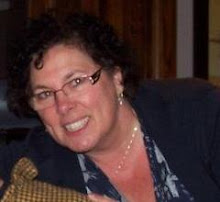
My photo
I still feel like a teenager on the inside, unfortunately my children do remind me how old I am!! I have lived for 20+ years as an Irish expat in The Netherlands. My favourite city here has to be Amsterdam.

Writing, reading, authentic living. It's all here at The Writing Process


Welcome to my blog. Let me start by telling you that I love writing. I love the sense of vitality it gives me. I love that it helps me to make sense of the world and to the people in it. I love that it helps me become wiser, more intuitive, empathic, and most of all autonomous.

All aspects - reading, writing and observing - are what make the process complete. The essence is storytelling, and learning about
life and yourself.


Showing posts with label narrative. Show all posts

Friday, November 30, 2012

NaNoWriMo day 30


Day 30

Well, I gave it my best shot, but didn’t quite make the 50k. I enjoyed making the effort and I am really pleased that, due to NaNoWriMo, my writing is once again a priority in my daily routine. It had been taking a back seat to any number of other activities every day that  my fear was that my current novel would never get finished. Well, having almost doubled the wordcount in November, revitalising the plot and getting to know my characters more intimately, my doubts have been eradicated.
I am almost there, people. The plot is as good as complete, almost every chapter has been worked out in detail. There’s lots of new dialogue and characters meeting each other and driving the plot along. The ending has been written, so I know where all the gaps in the narrative must lead to ultimately. So, I am satisfied.
Will I do it again next year? Lets just wait and see.

Monday, November 12, 2012

NaNoWriMo Day 12


It’s already day 12! Time is flying and I am beginning to wonder how close I will actually come to reaching 50.000 words by the end of the month. 

I had expected to write copious amounts in the weekend and therefore be under less pressure during the week to write a lot. But, as ever, I should not count my chickens before they are hatched. Saturday was a slow day. I had some vague ideas roaming around in my head, but they were just that, roaming and therefore hard to grasp. There were words, sentences, images, emotions but very little structure. Every so often I thought I caught one, but when I started to write, the flow dried up after about three sentences and it was back to mulling, chasing and feeling the words slip through my fingers like quicksand. 

I am not sure how many words I actually managed to get down, but it was not as many as I had hoped.
Sunday was a residue of Saturday’s frustration. Starting in the morning, I wrote two paragraphs, and then ran out of things to say. The weather however, was gorgeous so instead of wallowing in it I decided to take advantage and get out into the fresh air. Strolling along a nearby lake with the autumn sun on my face and observing others some with and some without dogs, some alone and some in couples cheered me up. I was able to evaluate my NaNoWriMo endeavors up to now, and be honest with myself about how important the 50.000 words are to me. 

When I looked at it clearly, I realized that the idea of ‘just getting the words down’ doesn’t always work for me. Oh, I applied it for the first couple of days and had clocked up a decent number of words. However, reading back on what I had written so that I could pick up the threads and write on, I became disillusioned.

Was I surrendering quality to quantity?
What is the point in writing 50.000 words just for the sake of it?
Do I want to have to scrap most of them come December?

I realized that by taking on this challenge I had in fact created an obstacle for myself instead of getting the juices flowing. That happens to me quite a lot. Once the pressure starts to build, I shut down. Creativity falls victim either to competition or to the need to perform. 

So I decided that, despite the word requirement, I was going to throw out all my worries about reaching the 50.000 words and give myself a more important goal: writing this novel in a voice and style that makes me happy and at a pace that the story itself dictates. 

In fact, summing this up I can say that external targets, imposed by others, sometimes hinder my progress rather than encourage me. The motivators that work for me are the internal ones, the ones with intrinsic rather than external rewards. 

Back behind my computer, with the promise of being true to the story, the words began to flow again, and the characters, who had been suffering my performance anxiety, now came back to life.
So, NaNoWriMo, I continue to write on a daily basis, but it is not the end of the world if my achievement at the end of the month is less than 50.000 words. 

Ironically, having decided to let go of the outside pressures and targets and to let the writing come from the right place and at its own pace, I actually clocked up a respectable 2.000 words in a couple of stolen hours before supper!

Wednesday, November 7, 2012

NaNoWriMo day 7


Having reached my target on Sunday for NaNoWriMo, Monday was a hard day. I ended up only writing about 300 words. And if I thought that was a poor result, yesterday had me writing quickly in my notebook before going to bed, after one of those really chaotic days when not only circumstances are confusing but your mind just won't seem to focus.

Being unable to concentrate on one idea or get control of my thoughts I decided to get back to basics. Basics for me means catching up on chores that I have been putting off. Cleaning the oven, microwave and dealing with other kitchen issues kept me busy all afternoon.

Then at the close of day, just when I thought I had narrowed things down to an approach that would get a new chapter started at least, two potential clients called and before I knew it I was racing against the clock to prepare the evening meal, fully determined to WRITE, WRITE, WRITE for the entire evening.

But, being there for a friend took priority, and hence, the sum total of my writing activities was reduced to a few scribbled notes before going to bed.

Anyhow, I now have two days backlog to catch up on. At least I have some notes to kick start this day 7.

Monday, November 5, 2012

NaNoWriMo day 5


By close of day 4

I had managed to get to the required wordcount to stay on track for the 50k target. Ik was really like pulling teeth yesterday. I should have known Sunday would be complicated. My kids, both in their twenties, were rambling in and out, filling me in on their bits and pieces, watching football on TV, and generally creating a rumble. Add to that that a really good friend had just lost her granny and was exchanging text messages with me which I continued to respond to.
We also have this tradition at my house that Sunday dinner be something special and I wanted to keep it that way. And after dinner we all settle down to watch So You Think You Can Dance, which has to be my favourite show of the week.
Well, with all of that going on, and exchanging posts with NaNoWriMo friends on FB I had my doubts about reaching the required word count. But, when I saw that some of my NaNo friends were already heading for 30k I was more determined than ever to at least achieve the minimum. At one stage I was typing blind while discussing algebra with my daughter - talk about split personality! At another, while fiction and reality merged, my typing almost mirrored the topic of conversation going on in my living room. How bizar is that?
I cooked my Sunday dinner, watched some TV, and at 11 o'clock last night was able to update my word count to well over 6600 words, sticking to the NaNo requirement.
Now I have to keep my fingers crossed that I haven't milked my creativity so much that I discover in a couple of hours that I have nothing to say or write today.
Day 5 here I come!

Saturday, November 3, 2012

NaNoWriMo day 2 and 3


I was convinced I had such a quiet life (?!?) that sticking to a NaNoWriMo schedule would be absolutely no problem at all. I had even rounded off all other obligations on Thursday. But, isn't it funny how we suddenly have all manner of things to do, important things, things that have to be done NOW, so many that writing gets shifted up the agenda until there are almost no hours left in the day? Well, in my life that is clearly no different. I got up yesterday morning, knowing I had to get my glassses fixed and had planned that in in the morning. But then, instead of just getting on with the writing business when I came back I remembered I wanted to call a translator friend, check out my pals on facebook, call a customer (could have waited until Monday) and the list goes on.
BUT, and here's the good news, when I finally sat down to write, I churned out almost 1500 words within two hours, and you know what, it's not a bad piece of writing.
Before I went to sleep I even wrote down some rough notes on the same chapter and have a kick start for today's writing activities.

Thursday, November 1, 2012

NaNoWriMo day 1


 Stick with me. I am participating in NaNoWriMo for the first time, and plan to journal about my experiences each day. Whether I write or not, I will journal about what motivated and hindered. 


Day one: 

of NaNoWriMo was a busier one than I expected. Started as I had promised myself after breakfast but was interrupted by the telephone after 300 words. A new customer who had found me via my other FB page Write Away, Text and Design. Rush job, but I wanted to do it. Then I had a quick coffee meeting with another networker in the area, and got home at lunch time. Did the translation in the afternoon, interrupted by a regular customer who needed a quick brainstorm. 

Finally just before it was time to make dinner I got to 958 words and by close of day at 20:30 it was 1216.

All in all, I am satisfied.

Wednesday, September 5, 2012

And now the European Prize for Literature

                                                 Available on bol.com

Nederlandse versie


Just back from Ireland  and as usual with a stock of books bought at the airport Eason´s that always has great bargains and special offers. This time it was the three for two offer. I use such opportunities to be more experimental in my choice of book and perhaps pick an author I have previously not read.
And so I arrived home with three more books. The first of the three I decided to read was a small novel, about 50,000 words - the Man Booker Prize winner The Sense of an Ending by Julian Barnes.

Having missed the run up to the award ceremony and never having read anything by him before, I went into this book with zero expectation and entirely unbiased. About thirty pages in, I began to question the Man Booker Jury’s decision, as the story had, up to that point, failed to completely grab my attention. The narrative bordered on the superficial, characters remained two dimensional and it was unclear exactly what the motivation for this novel actually was.
Into part two, and my curiosity is sparked. I find myself grabbing odd moments to read a few pages. Barnes is, by his unusual approach enticing me to read on.
This is a first person narrative. The narrator, Tony, is a divorced man in his sixties, who, by means of an inheritance, is confronted with specific actions in his past.

The other characters in the novel are incomplete, almost caricature, but now I am beginning to get it. They could not be otherwise because the entire premise of the novel is in fact that Tony, the narrator, lacked the insight and empathy to understand those around him, even his closest friends. It is precisely his inability to  truly see and accurately assess situations and the behavior of those involved in them, that is the issue in this story.

The narrator has failed to enrich his emotional world by taking a plunge off the deep end and now, late in life, he realizes that he has structured his entire existence around maintaining his limited viewpoint. To see more, would have upset his equilibrium and his notion of who he was, and who others were in relation to him. The inheritance evokes old memories, old situations, and gives him a second chance as it were, to discover the truth.

But even in this latter phase of his life, having again failed to empathize with his old girlfriend, the same girlfriend he so badly misunderstood in the past, and left alone, the penny finally drops.
It is with a sense of melancholy and regret that the story comes to a close.

The fact that Barnes has managed to keep the reader intrigued and curious, while at the same time creating a narrator with such a limited viewpoint is an amazing feat. I, the reader, see every situation through the eyes of a limited protagonist. His reality is my reality. I believe it completely. Only when the scales partially fall from his eyes and not a second sooner, do they fall from mine.

It is ironical and paradoxical that in a first person narrative with just such a narrator, Barnes displays amazing insight and understanding of human nature.  It is therefore only on finishing the book, and pondering on it, that I truly realized just how great this book really was.

A well-deserved Man Booker Prize Winner.  And now, winner of the European Prize for Literature!

Friday, April 8, 2011

More cross medial or intermedial creations


Cross media seems to be the theme of the day. Where I was privileged to experience the ultimate in cross media with the 3D film of Carmen, today I was lucky enough to enjoy the mixed/cross media work of printer and fine artist, Ronald Chapeau at The Art Shop, in my home town.


The Art Shop opened Ronald Chapeau’s exhibition last Sunday. Apparently, the opening attracted a lot of attention. I missed it, as I was at the opera! But this morning, having the space to myself to stand back and soak in the work was perfect for me.

Ronald Chapeau uses photographs of some of my favourite actors, in particular Al Pacino as the young Don Corleone (naturally against the backdrop of Marlon Brando, the Godfather himself) and Heath Ledger as The Joker from the batman film, The Dark Knight. He repeatedly uses the same photograph on several canvasses as the basis for his creations. Then by using screen printing techniques and exciting, daring, bright almost fluorescent colour, turns each one into a unique work of art. It is then apparent how an identical image can be made to evoke a different reaction, emotion, when used in combination with other colours or other subliminal items (such as newspaper cuttings or quotes) on the canvas. It is the combination that does something to the senses.

It is no accident that on one of the Don Corleone canvasses a Sudoku puzzle from the newspaper is visible. No accident that bright yellow and garish purple figure strongly in the Joker canvasses and are apparently thrown on carelessly as though the paints have exploded, while the words “I am a simple man, I enjoy either dynamite or gunpowder”, cross the canvas.

Ronald Chapeau has mastered the art of subliminally manipulating the observer’s reaction. Several media: film, newspaper and photography are churned together on a canvas and used alongside strong, decisive painting techniques to create something new.

And it is precisely because of the subtext contained in the narrative of each of the media, that the end result is so powerful and evocative.

Monday, February 28, 2011

Start again

Don't be like Gaudi! You finished your novel, now move on.


You are still deeply involved with your completed novel, and if you add the disappointment of rejection to your already sombre mood at having to put the characters you’ve spent so long getting to know and love, to rest, then you may be feeling ungrounded, and unfocussed.

How do you counter this? The best way to reconnect with the world and your creativity is to get started on your next project.

But allow for that period of grieving. Take the time to say goodbye to your previous work. Distance yourself from it. Continue to send it out to publishers and agents by all means, but accept that emotionally, it is done. Recognise what you are feeling and integrate it. Denying it, or trivialising it will not help. Just as writing the novel brought you to new levels of awareness, so too will saying goodbye. Every emotion is a valid emotion. And each one has its place in your consciousness.

Completing a novel is a huge achievement. In order to get to this point you learned to take yourself seriously. You faced your demons, listened to the subconscious voices, and embraced them. Well, the completion of the novel, and the farewell to the characters you’ve nurtured for some months, demands the same level of consciousness and the same commitment to your emotional world. Using exactly the same tools as were employed in reaching your authenticity, the journal (posted in the blog archive), the time management, the solitude where appropriate, you can say goodbye.

Say goodbye, accept it, and take the rejection by agents and publishers and remember that these days that does not reflect on the value of your work. These days, self publishing, POD publishing and other avenues for showcasing your work, are acceptable and respectable. If, for you, the novel is only complete when it is out there, then pursue that, but, at the same time, make use of the emotional and psychological space you have created through this mourning phase, to start soaking up new ideas, new inspirations.

If writing a novel took solitude and a retreating into self, then this period should have you reconnecting with the outside world; it should have you observing and participating all at the same time. Your notebook should be close at hand, and all and any observations should be written down. Remember nothing is too silly, too insignificant, or too trivial. As I illustrated way back in my first article (posted in the blog archive), the mundane is only mundane when not used properly. Washing dishes, doing housework, talking to your local grocer, browsing the DIY store, observing fellow drivers while stuck in a traffic jam, can all be incorporated into your novel. Or, think about how you might process the difficulties that you have faced in life. Sometimes writing about them, or using the emotion you felt to drive another story, can take you to the next level in your strive for autonomy and peace of mind, as well as helping you make your writing more significant. Be aware, be fully conscious, because the next novel might be just around the corner.

And the most important thing to remember is, that you can be working this new project, while winding down the old one. My own experience has taught me that moving on and allowing the seed of a new story to take root in your head and heart is probably the healthiest thing you can do while you wait for your previous work to be published. If you ‘get stuck’ on only finding a publisher then being a writer will be a cause for frustration and disappointment. Even self-publishing, though taking time and determination, will not give the same satisfaction and peace of mind that writing itself does. So, combine the two, by all means. Or at least, give yourself permission to do both, even if the new project is no more than jotting down notes, and journaling. This is your mental well-being.

Monday, December 6, 2010

The Solitude of Prime Numbers

Since taking the course in Adaptation at the University of Amsterdam, I have learned to appreciate the whole process of dissecting, analyzing, and re-inventing particular books for filming or dramatization of another form. When it comes to the adaptation book to film, I have come to regard the film as an extraction of the original piece of work. In the best case sticking to the original narrative, in the worst, deviating so drastically it bears little resemblance to the source material, perhaps not even aimed at affecting the reader (observer) consumer in the same way.

A book to film adaptation that best illustrates the latter is A Beautiful Mind, a big budget Hollywood movie on the life of Mathematical genius, John Nash. The film in no shape or form resembles the movie (or vice versa, I should say) apart from the fact that both have John Nash as the central character. The film is a dramatic one, with elements of a love story, and a personal struggle. The book is a biography, and written with very little poetic licence. It is a factual chronicle of a schizophrenic genius. It can be appreciated on an entirely different level than the film. It is devoid of drama or even sympathy. It is a factual, clinical work, and is so far removed from the tone and narrative of the film to have little bearing on the appreciation for either or both.

However, when choosing to watch a film that has been adapted from a novel or other book, I have come to the conclusion that it is better to be familiar with the source material before watching a film, or as is the case with the works of Annie Proulx, be interested in the dramatized version only and skip the novel completely (a personal opinion). The stories of Annie Proulx are perfectly suited for screening, the narrative and characterization are always wonderful, I just have a problem getting into her style an sticking it out to the last page. Thus, I enjoy her stories after adaptation.

In The Solitude of Prime Numbers, I am less sure of the film’s relationship to the novel. Do they stand apart, do they concur, or do they meet somewhere in between? I am not sure.
I saw the film The Solitude of Prime Numbers without being familiar with the novel. It was a wonderful piece of artistic cinema, with characters that had depth and honesty. Reality was harsh at times, and the two main characters, Alice and Mattia had more than their fair share of troubles as children; troubles that left them scarred and lonely and almost unable to reach out across the abyss and so heal their damaged spirits.

I loved the film; I was enthralled by the narrative itself and the manner in which it was depicted. The director chose for a stark style, yet managed to subdue the tone, play down certain elements, and emphasise others. It was definitely a ‘show don’t tell’ atmosphere, playing up to the critical abilities and intelligence of the observer. The story flowed smoothly; the progression was logical, understandable, even when it was shocking and painful. We understand what motivates Alice and Mattia, yet we are relieved in the end that they reach a place of peace and forgiveness and are finally open to allow themselves to hope for a better future.

Not so the novel. The narrative here is less smooth, less homogenous. It chops and changes, reverts quite significantly to ‘telling instead of showing’ and lays certain incidents on too thickly, while under-describing others. It is at times abrupt and illogical in its progression, and at times has sidelines that could easily be erased without detracting from the main narrative.

But, it is the conclusion that disappoints most. Having seen the film (unfortunately), I did not expect the desolate, hopeless, futile rounding off that the author dished up. Utterly unpalatable.

Perhaps if I had not previously been served the semi-happy ending of the film this desolation would have hit less hard. I might have been more accepting of the ‘no happily ever after’ for these two.

Having said all of that, I would still recommend the novel, purely because of the writing style and the fresh voice of the writer. The story line is of itself innovative, original, thought provoking and starkly realistic.
I would recommend the film too, but as a separate creation.

Novel lovers, read the book first to avoid disappointment.