It’s all too easy to want to hasten the process and just get on with the actual novel, and I am sure there are plenty of novelists who are capable of doing so, but I would strongly recommend that a novice novelist take the time to do a chapter breakdown. The chapter breakdown will serve more than one purpose. Not only will it give more clarity to your initial inspiration, but it will also be a valuable aid in letting your characters evolve. And even more importantly, by going through the mechanics of a chapter breakdown, you will be able to see if there’s enough ‘meat on the bones’ of your plot. If at this stage the plot cannot be padded out into about fifteen chapters, then there’s not enough story to grow into a novel.
Given that you do have a fifteen-chapter story, then the breakdown will be an invaluable aid in your writing of the novel-in-progress. On those dull days when you feel overwhelmed by this project the chapter breakdown will do just that – break it down into manageable parts. It will also be your guide, and keep your mind clear and your thoughts directed. It will serve as a map and hold your focus. If you have chosen a less traditional novel form, one without the constraints of chronology, geography or historical context, then using the chapter breakdown will be your structure. I don’t know whether Michael Ondaatje used a chapter breakdown when writing "The English Patient," but I do know that were I to write such a complex novel, then I would definitely take the time to map out the story in this form.
There are novelists who shy away from a chapter breakdown, believing it will take the spontaneity out of their writing, and prevent the plot from developing and the characters to unfold naturally. And certainly I would agree with this opinion, if you choose to stick to the initial chapter breakdown as though it was written in blood. But if you give yourself the freedom to change and adapt, or swap chapters around, or re-write a whole section, then no, this need not be the case. Then the advantages then outweigh the disadvantages.
And now, with the chapter breakdown completed the first hurdle to your novel presents itself in the form of the OPENING SENTENCE. I have a rather simplistic solution to this – just write whatever comes into your head in order to get the story going. You can always change it at a later stage, even when the first draft is completed. At that stage the story will have grown into its own style and tone and chances are that even if you’d struggled for weeks on that elusive first sentence, you’d want to change it now, anyway! So spare yourself the headache.
I mentioned the word momentum earlier in the article. Now that you’ve written that first word, put that first, virgin idea onto paper (or your word processor), make an appointment with yourself in the same way you would with a colleague, friend or family member, that you will sit in your writing chair at a certain time every day or week. Inspired or not, you will write something. By making this appointment you are creating momentum.
Eventually writing will become as much a part of your daily routine as brushing your teeth. The novel will inhabit your thoughts. The plot will unfold; the characters will talk to you. The novel will live, become real, tangible almost. And who cares if you fail to get it word perfect first time. Just go with the flow. Enjoy the ride. Remember that this is a first draft, and it can always be adapted and improved. A blank page is just a blank page!
When you reach a point where you miss the writing if you break that appointment, when you feel restless when not writing, when you don’t break that appointment because ‘something else’ comes up, you know you are a true writer. You know you have committed to this project.
About Me
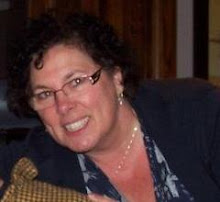
- Geraldine
- I still feel like a teenager on the inside, unfortunately my children do remind me how old I am!! I have lived for 20+ years as an Irish expat in The Netherlands. My favourite city here has to be Amsterdam.
Showing posts with label disability. Show all posts
Showing posts with label disability. Show all posts
Saturday, January 23, 2010


Sunday, February 15, 2009
Article 1. The Embryo
So often we hear aspiring writers complain that they simply don’t have an interesting enough life to be inspired to write a novel, theirs is a humdrum, middle of the road, perhaps even boring existence, they groan. Often they criticise their own talents, suggesting that their language usage is childish or at least lacking any multi-syllabic words, and that their sentences are short, simplistic, and unimaginative.
I too, went through this stage of self-castigation, and often started on a story, only to trash it very quickly, sinking into despair that this deep-seated desire to write was a pipe dream. Did I suffer from delusions of grandeur? Was I perhaps living in a fantasy world, where my will to write would by magic give me the words, sentences and ideas to match my grand notions?
I picked up a Maeve Binchy novel, then one by Anne Rice. I was fascinated by the difference in their approach. Maeve Binchy’s novel was firmly rooted in reality, in the mundane. Her work dealt with the everyday happenings in the lives of everyday people. Anne Rice on the other hand, describes the fantastic, the supernatural, and uses long, intricate sentences, and a flowery, romantic vocabulary to do so. Yet both are writers of merit, both are respected, and more than that, both earn a good living with their writing.
Why were both so successful, yet at the same time, so divergent? The answer was simple. They were true to their own personalities, and the source of their inspiration. I cannot imagine Maeve Binchy apologising for the subject matter, nor the style she chooses to give it form, and Anne Rice has us eating out of her hand, and believing completely in the existence of Lestat, her infamous vampire. She has us fall in love with him, desiring him as though he were a film star.
In short, no idea, no spark of inspiration is too trite to be used, as long as we use it well and stay true to our own personalities and our own styles. Had Maeve Binchy taken her idea and attempted to give it to us using Anne Rice’s style, then it would have jarred, and lost its power. By the same token, Anne Rice’s ideas would be lost if poured into Maeve Binchy’s mould.
So, using my discovery, I decided to take myself seriously, believe in myself, and have faith in the ideas that would come to me, however mundane they might seem initially.
And then the germ that was to grow and ferment into what became ‘The Cloths of Heaven’ came to me through the channels of my normal, middle of the road life, and through the experiences of those close to me. And when it came to me, I took it, and let it settle into the comfort of my mind, like an embryo bedding into the wall of the womb.
The process of division and multiplication had begun: the single idea separated and doubled and became two, then four then eight related ideas, and more, until the story unfolded and became the novel.
In the next article I will tell you about that first idea, and about the gathering of ideas that became the story, the backbone of ‘The Cloths of Heaven’
I too, went through this stage of self-castigation, and often started on a story, only to trash it very quickly, sinking into despair that this deep-seated desire to write was a pipe dream. Did I suffer from delusions of grandeur? Was I perhaps living in a fantasy world, where my will to write would by magic give me the words, sentences and ideas to match my grand notions?
I picked up a Maeve Binchy novel, then one by Anne Rice. I was fascinated by the difference in their approach. Maeve Binchy’s novel was firmly rooted in reality, in the mundane. Her work dealt with the everyday happenings in the lives of everyday people. Anne Rice on the other hand, describes the fantastic, the supernatural, and uses long, intricate sentences, and a flowery, romantic vocabulary to do so. Yet both are writers of merit, both are respected, and more than that, both earn a good living with their writing.
Why were both so successful, yet at the same time, so divergent? The answer was simple. They were true to their own personalities, and the source of their inspiration. I cannot imagine Maeve Binchy apologising for the subject matter, nor the style she chooses to give it form, and Anne Rice has us eating out of her hand, and believing completely in the existence of Lestat, her infamous vampire. She has us fall in love with him, desiring him as though he were a film star.
In short, no idea, no spark of inspiration is too trite to be used, as long as we use it well and stay true to our own personalities and our own styles. Had Maeve Binchy taken her idea and attempted to give it to us using Anne Rice’s style, then it would have jarred, and lost its power. By the same token, Anne Rice’s ideas would be lost if poured into Maeve Binchy’s mould.
So, using my discovery, I decided to take myself seriously, believe in myself, and have faith in the ideas that would come to me, however mundane they might seem initially.
And then the germ that was to grow and ferment into what became ‘The Cloths of Heaven’ came to me through the channels of my normal, middle of the road life, and through the experiences of those close to me. And when it came to me, I took it, and let it settle into the comfort of my mind, like an embryo bedding into the wall of the womb.
The process of division and multiplication had begun: the single idea separated and doubled and became two, then four then eight related ideas, and more, until the story unfolded and became the novel.
In the next article I will tell you about that first idea, and about the gathering of ideas that became the story, the backbone of ‘The Cloths of Heaven’
Subscribe to:
Posts (Atom)