About Me

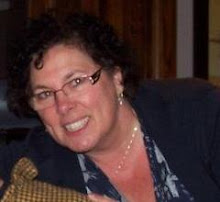
My photo
I still feel like a teenager on the inside, unfortunately my children do remind me how old I am!! I have lived for 20+ years as an Irish expat in The Netherlands. My favourite city here has to be Amsterdam.

Writing, reading, authentic living. It's all here at The Writing Process


Welcome to my blog. Let me start by telling you that I love writing. I love the sense of vitality it gives me. I love that it helps me to make sense of the world and to the people in it. I love that it helps me become wiser, more intuitive, empathic, and most of all autonomous.

All aspects - reading, writing and observing - are what make the process complete. The essence is storytelling, and learning about
life and yourself.


Monday, February 28, 2011

Start again

Don't be like Gaudi! You finished your novel, now move on.


You are still deeply involved with your completed novel, and if you add the disappointment of rejection to your already sombre mood at having to put the characters you’ve spent so long getting to know and love, to rest, then you may be feeling ungrounded, and unfocussed.

How do you counter this? The best way to reconnect with the world and your creativity is to get started on your next project.

But allow for that period of grieving. Take the time to say goodbye to your previous work. Distance yourself from it. Continue to send it out to publishers and agents by all means, but accept that emotionally, it is done. Recognise what you are feeling and integrate it. Denying it, or trivialising it will not help. Just as writing the novel brought you to new levels of awareness, so too will saying goodbye. Every emotion is a valid emotion. And each one has its place in your consciousness.

Completing a novel is a huge achievement. In order to get to this point you learned to take yourself seriously. You faced your demons, listened to the subconscious voices, and embraced them. Well, the completion of the novel, and the farewell to the characters you’ve nurtured for some months, demands the same level of consciousness and the same commitment to your emotional world. Using exactly the same tools as were employed in reaching your authenticity, the journal (posted in the blog archive), the time management, the solitude where appropriate, you can say goodbye.

Say goodbye, accept it, and take the rejection by agents and publishers and remember that these days that does not reflect on the value of your work. These days, self publishing, POD publishing and other avenues for showcasing your work, are acceptable and respectable. If, for you, the novel is only complete when it is out there, then pursue that, but, at the same time, make use of the emotional and psychological space you have created through this mourning phase, to start soaking up new ideas, new inspirations.

If writing a novel took solitude and a retreating into self, then this period should have you reconnecting with the outside world; it should have you observing and participating all at the same time. Your notebook should be close at hand, and all and any observations should be written down. Remember nothing is too silly, too insignificant, or too trivial. As I illustrated way back in my first article (posted in the blog archive), the mundane is only mundane when not used properly. Washing dishes, doing housework, talking to your local grocer, browsing the DIY store, observing fellow drivers while stuck in a traffic jam, can all be incorporated into your novel. Or, think about how you might process the difficulties that you have faced in life. Sometimes writing about them, or using the emotion you felt to drive another story, can take you to the next level in your strive for autonomy and peace of mind, as well as helping you make your writing more significant. Be aware, be fully conscious, because the next novel might be just around the corner.

And the most important thing to remember is, that you can be working this new project, while winding down the old one. My own experience has taught me that moving on and allowing the seed of a new story to take root in your head and heart is probably the healthiest thing you can do while you wait for your previous work to be published. If you ‘get stuck’ on only finding a publisher then being a writer will be a cause for frustration and disappointment. Even self-publishing, though taking time and determination, will not give the same satisfaction and peace of mind that writing itself does. So, combine the two, by all means. Or at least, give yourself permission to do both, even if the new project is no more than jotting down notes, and journaling. This is your mental well-being.

Tuesday, February 8, 2011

Discovering your Strengths - Living your Best Life

How many of us, well into our careers, still live with the mistaken idea that the purpose of most of our activities is to work on those weaknesses and somehow turn them into strengths? I would venture to say, the majority of us, certainly those of us who grew up with post war parents who themselves believed that success in working life and achievement can be measured by the extent to which his has been accomplished.


In the meantime, strengths, natural aptitudes, and in most cases the activities that enhance our well being are almost ignored, simply because so much energy goes into working on those weaknesses.


When put this simply, none of us should be surprised at the level of unhappiness sustained by a lot of people in their jobs.


So, in the face of this general discontent, Marcus Buckingham comes along to shake us up and wake us up. With the help of his, dare I say it, easy to understand theory, we can turn our professional and personal lives around.


What you need to do, is rediscover the strengths that are an integral part of your own personality, and by strengths he means, not only the things you excel at but that also give a sense of satisfaction and contentment. Then to increase well being it is essential to take these discoveries seriously and ensure they can be put to use to either help you choose a new career path or to improve your situation in your current job.


Bosses, he says, must be aware of the natural strengths of employees and work on finding ways of utilising these instead of regularly planning training programmes to help them identify weaknesses that subsequently should be worked on to transform them into strengths because that just isn’t about to happen. It takes much more energy and investment to work on weaknesses than it does to enhance strengths.


Simple, yet it took Marcus Buckingham to point it out. A definite eye opener.

Monday, December 6, 2010

The Solitude of Prime Numbers

Since taking the course in Adaptation at the University of Amsterdam, I have learned to appreciate the whole process of dissecting, analyzing, and re-inventing particular books for filming or dramatization of another form. When it comes to the adaptation book to film, I have come to regard the film as an extraction of the original piece of work. In the best case sticking to the original narrative, in the worst, deviating so drastically it bears little resemblance to the source material, perhaps not even aimed at affecting the reader (observer) consumer in the same way.

A book to film adaptation that best illustrates the latter is A Beautiful Mind, a big budget Hollywood movie on the life of Mathematical genius, John Nash. The film in no shape or form resembles the movie (or vice versa, I should say) apart from the fact that both have John Nash as the central character. The film is a dramatic one, with elements of a love story, and a personal struggle. The book is a biography, and written with very little poetic licence. It is a factual chronicle of a schizophrenic genius. It can be appreciated on an entirely different level than the film. It is devoid of drama or even sympathy. It is a factual, clinical work, and is so far removed from the tone and narrative of the film to have little bearing on the appreciation for either or both.

However, when choosing to watch a film that has been adapted from a novel or other book, I have come to the conclusion that it is better to be familiar with the source material before watching a film, or as is the case with the works of Annie Proulx, be interested in the dramatized version only and skip the novel completely (a personal opinion). The stories of Annie Proulx are perfectly suited for screening, the narrative and characterization are always wonderful, I just have a problem getting into her style an sticking it out to the last page. Thus, I enjoy her stories after adaptation.

In The Solitude of Prime Numbers, I am less sure of the film’s relationship to the novel. Do they stand apart, do they concur, or do they meet somewhere in between? I am not sure.
I saw the film The Solitude of Prime Numbers without being familiar with the novel. It was a wonderful piece of artistic cinema, with characters that had depth and honesty. Reality was harsh at times, and the two main characters, Alice and Mattia had more than their fair share of troubles as children; troubles that left them scarred and lonely and almost unable to reach out across the abyss and so heal their damaged spirits.

I loved the film; I was enthralled by the narrative itself and the manner in which it was depicted. The director chose for a stark style, yet managed to subdue the tone, play down certain elements, and emphasise others. It was definitely a ‘show don’t tell’ atmosphere, playing up to the critical abilities and intelligence of the observer. The story flowed smoothly; the progression was logical, understandable, even when it was shocking and painful. We understand what motivates Alice and Mattia, yet we are relieved in the end that they reach a place of peace and forgiveness and are finally open to allow themselves to hope for a better future.

Not so the novel. The narrative here is less smooth, less homogenous. It chops and changes, reverts quite significantly to ‘telling instead of showing’ and lays certain incidents on too thickly, while under-describing others. It is at times abrupt and illogical in its progression, and at times has sidelines that could easily be erased without detracting from the main narrative.

But, it is the conclusion that disappoints most. Having seen the film (unfortunately), I did not expect the desolate, hopeless, futile rounding off that the author dished up. Utterly unpalatable.

Perhaps if I had not previously been served the semi-happy ending of the film this desolation would have hit less hard. I might have been more accepting of the ‘no happily ever after’ for these two.

Having said all of that, I would still recommend the novel, purely because of the writing style and the fresh voice of the writer. The story line is of itself innovative, original, thought provoking and starkly realistic.
I would recommend the film too, but as a separate creation.

Novel lovers, read the book first to avoid disappointment.